US Consulate
KCCT is the architect of record in a design-build partnership to deliver this new 12-building campus on a 2.8-hectare site, with a program that includes a new office building, a Marine Security Guard Residence, parking garages, a support annex, and other ancillary facilities. The Consulate features shaded exterior sky gardens carved from the structure, which create places for respite, for conversation, and for controlled views of the surrounding neighborhood. Each sky garden is unique and inspired by a distinctive aspect of Moroccan culture.

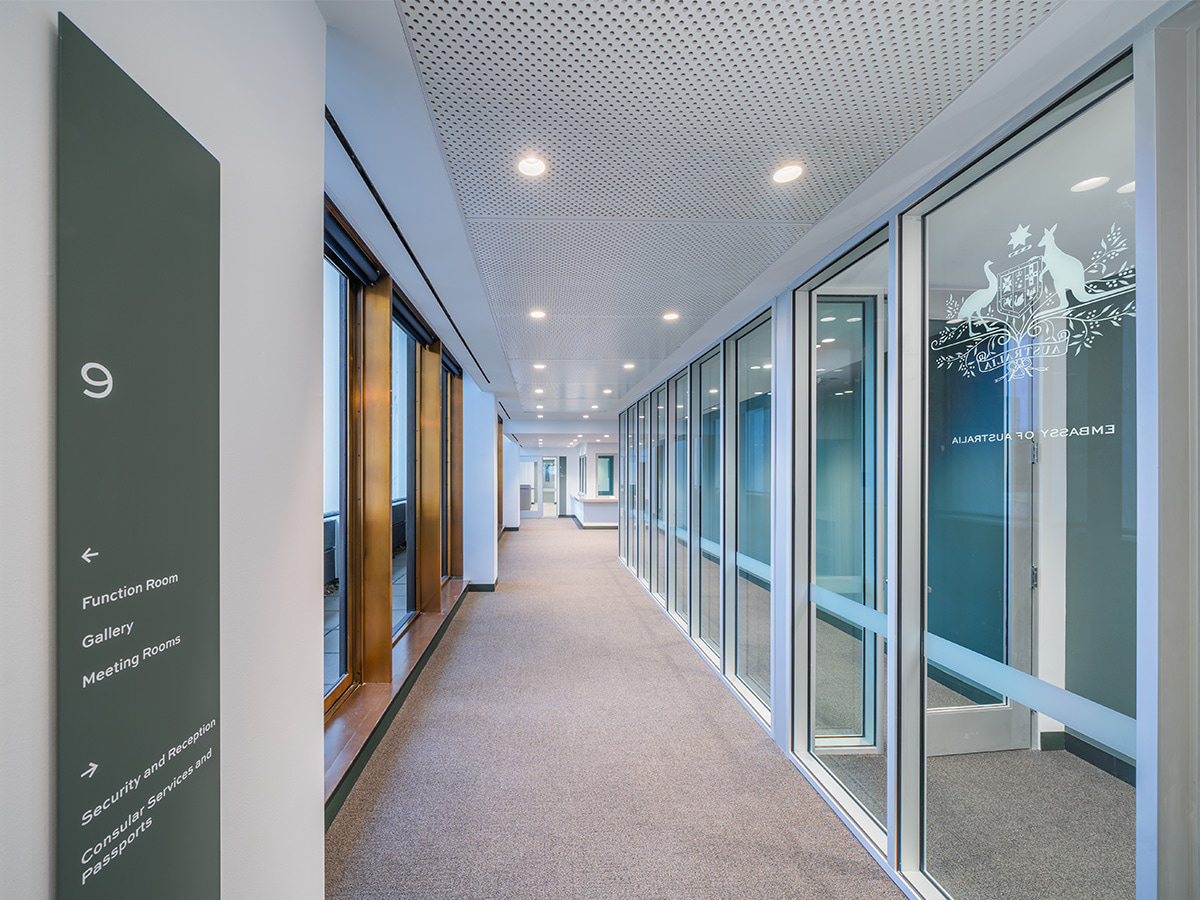
The interior architecture strategy creates a contrast to the exterior by incorporating color-saturated and color-rich spaces. The main lobby incorporates a sophisticated green that provides a connection to the plantings on the exterior of the building.
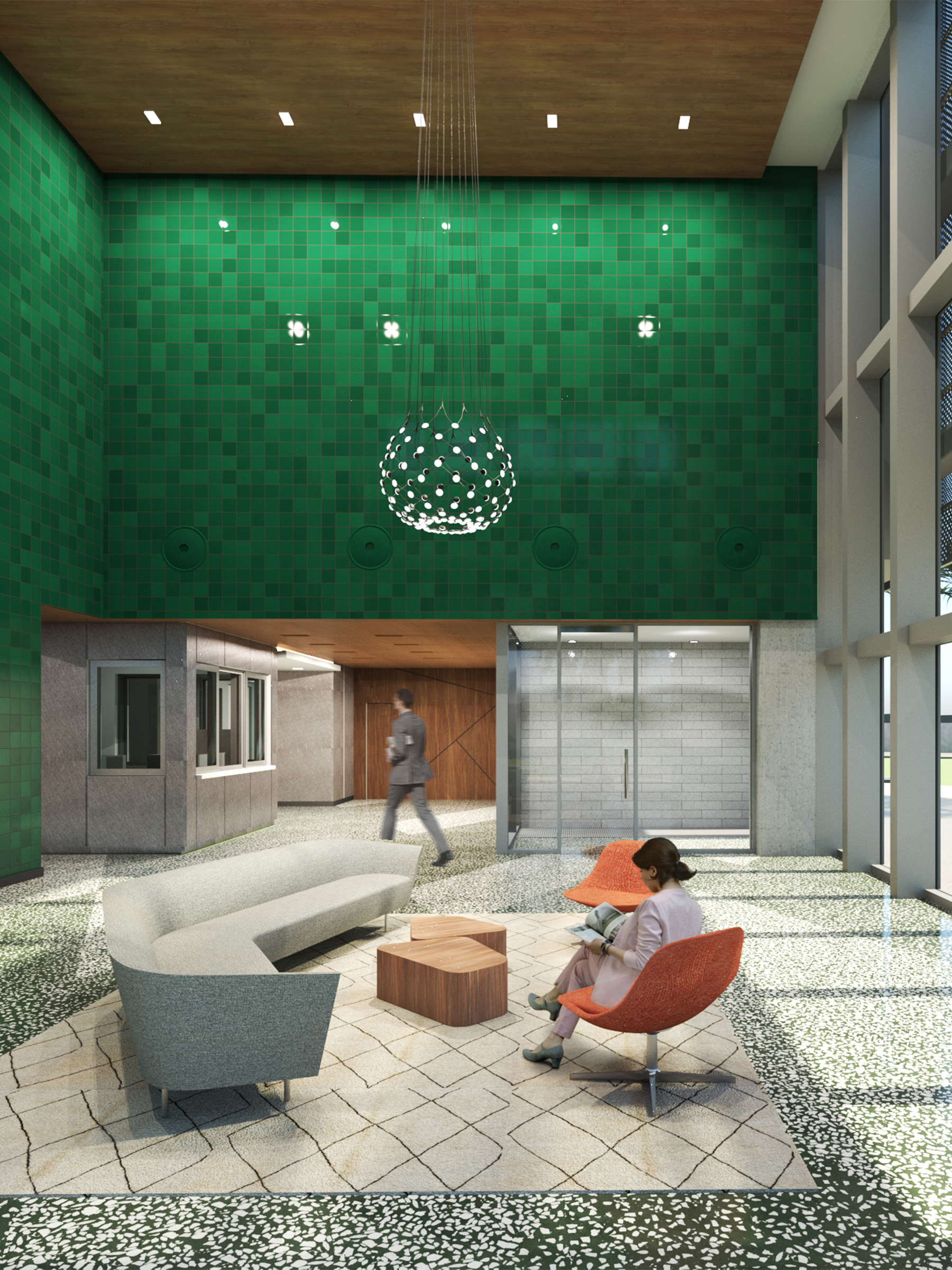
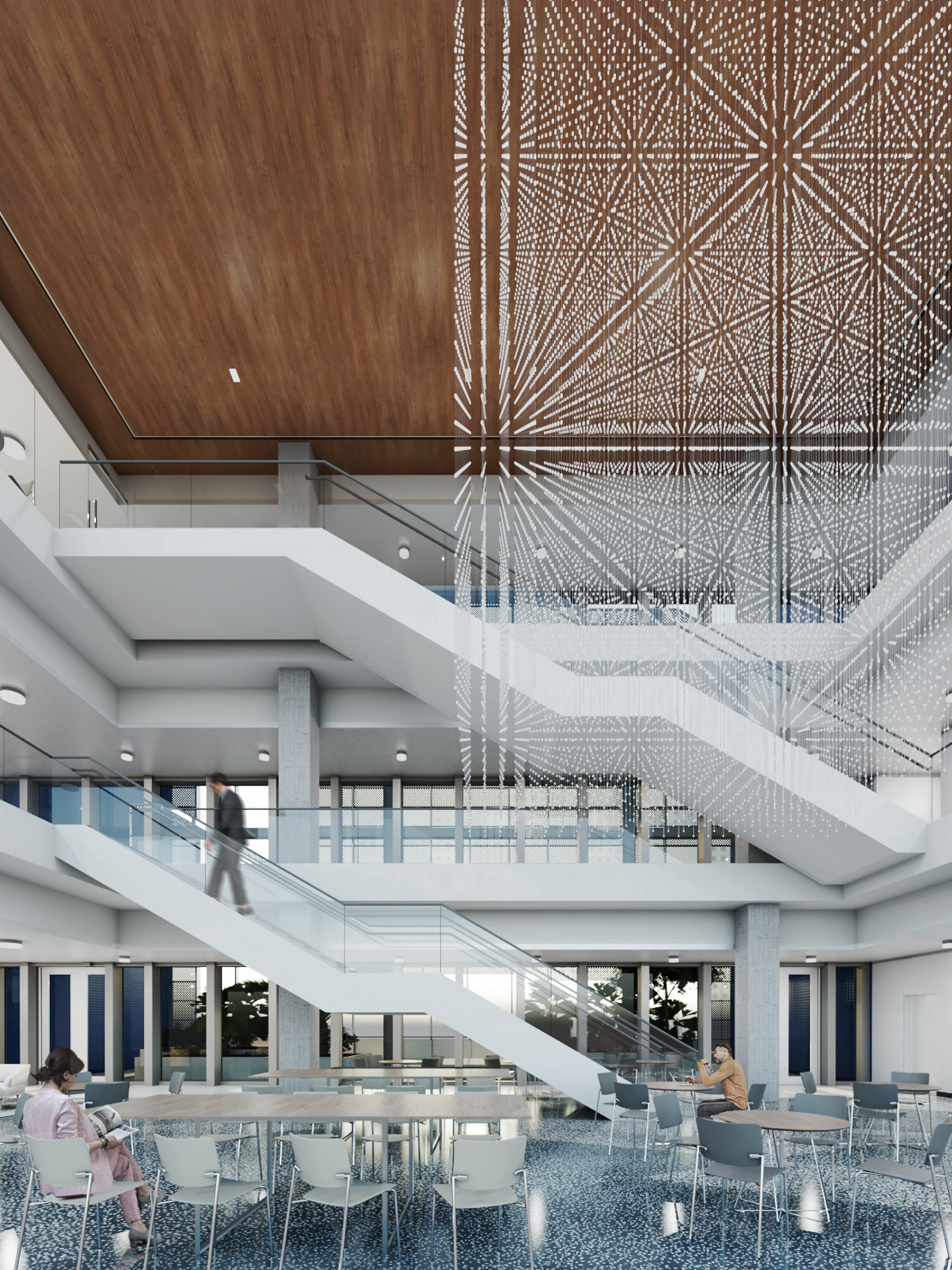
Hints of these saturated hues are perceptible from outside the building through windows and the perforated metal screen facade, elevating the experience of the exterior representational spaces.
Complementary and analogous color relationships draw inspiration from a traditional color palette. A dark, rich blue zellige tile grounds the heart of the building: the gallery space. It is deep and cool, in contrast to the white and hot exterior context.
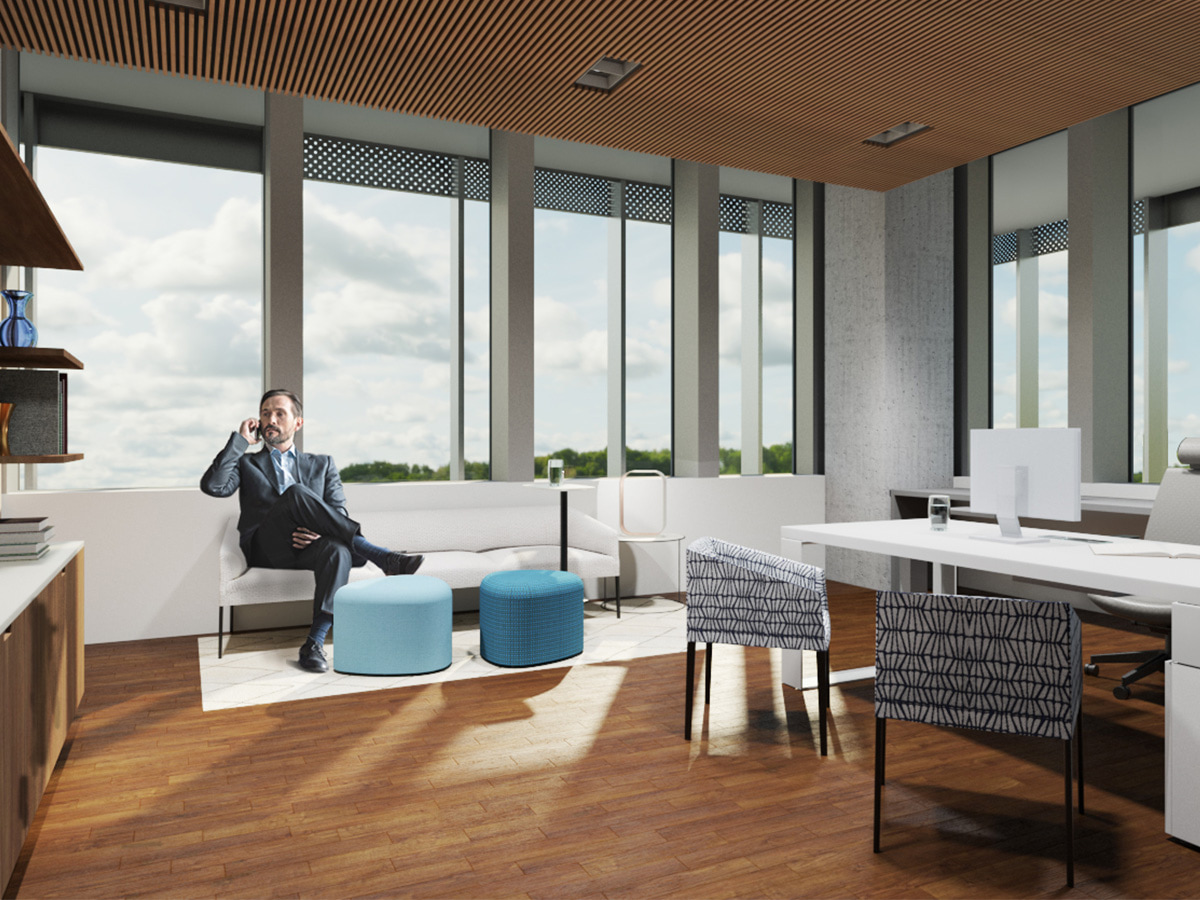
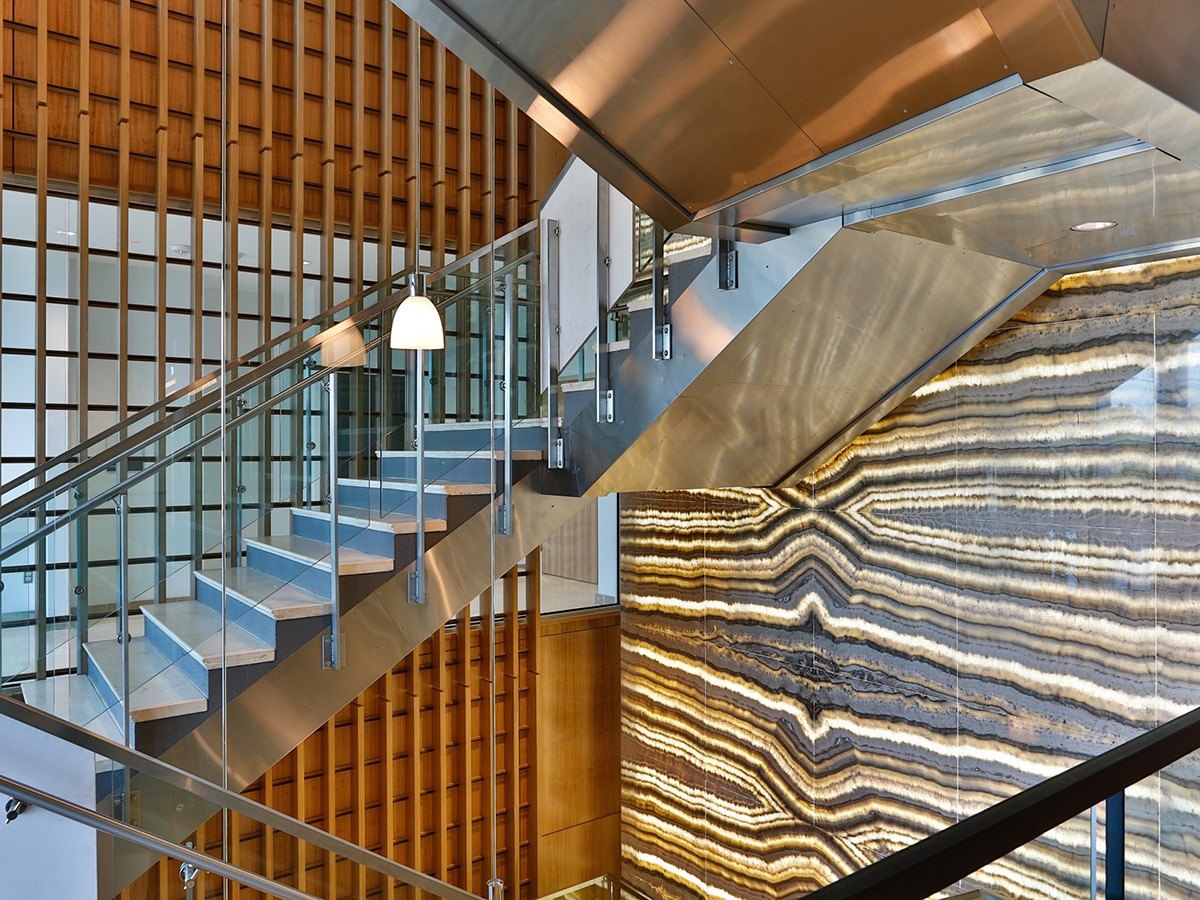
The interior color palette is inspired by traditional Moroccan approaches to color, including Moroccan brass lanterns with stained glass in sapphire, ruby, and emerald. Thinking of the whole building as an enlarged mosaic, significant spaces in the building are saturated with different hues. Color is integrated into traditional zellige tiles, concrete floors, and terrazzo floors. The same white aggregate ties the terrazzo together throughout the building, and the color-rich approach in select materials balances neutral tones in paint, ceiling, and other background finishes. Walnut wood ceilings add natural warmth to important spaces.

The design of the new Consulate evolves from high-performance design principles. The new office building provides a comfortable workplace for consular employees and a positive experience for visitors, featuring state-of-the-art building systems and an architectural design that highlights the beneficial aspects of the weather condition. The site showcases a weather condition-appropriate landscape design and employs stormwater and wastewater management strategies that help sustain the local hydrologic cycle.
This new campus meets the functional aspects of the program and provides operational adaptation through growth strategies, redundancy of critical systems, low-water usage, and renewable energy that supports 25% of the energy use of the new office building. The project provides secure, functional, and adaptable facilities that enable US foreign policy through building technologies, art, and culture.