


KCCT serves as the associate architect in collaboration with lead designer Weiss/Manfredi.

US Embassy
New Delhi, India
The design for the new office building in New Delhi presents a vision of the architecture and landscape that enhances the Embassy’s existing iconic architecture while meeting current security standards and evolving diplomatic needs.
Originally designed in 1958 by Edward Durell Stone, the Embassy is one of the largest and most active diplomatic missions in the world, with a daily intake of up to 1,000 visitors. The first phase of this major campus rehabilitation envisions a new chancery office building integrated directly across from the historic chancery, recasts the 28-acre chancery compound as a multifunctional campus setting, and meets collocation requirements by relocating 200 at-risk desks from the off-compound American Center.

Design Approach
The new design precedes restoration of the historically significant chancery building. The project’s new office building, staff diplomatic apartments, and transformed landscape provide a secure campus for the US’s growing mission in India. Central to the design is the integration of new buildings into an existing campus in a manner that complements rather than mimics the historic and legacy buildings on-site. KCCT led the design of the general office areas within the new office building, prioritizing densification, space planning, and a functional interior layout that ties to the design of the public spaces, facilitates diplomatic use, and invokes the common theme of the local vernacular.
A refined central spine forms a resilient landscape that connects the chancery and enclave campuses. The project redefines functional zones to create a clear service and support zone with a new support annex and a residential zone with new staff diplomatic apartments. The new support annex provides secure on-site office and consular swing space during construction before conversion to its intended use.
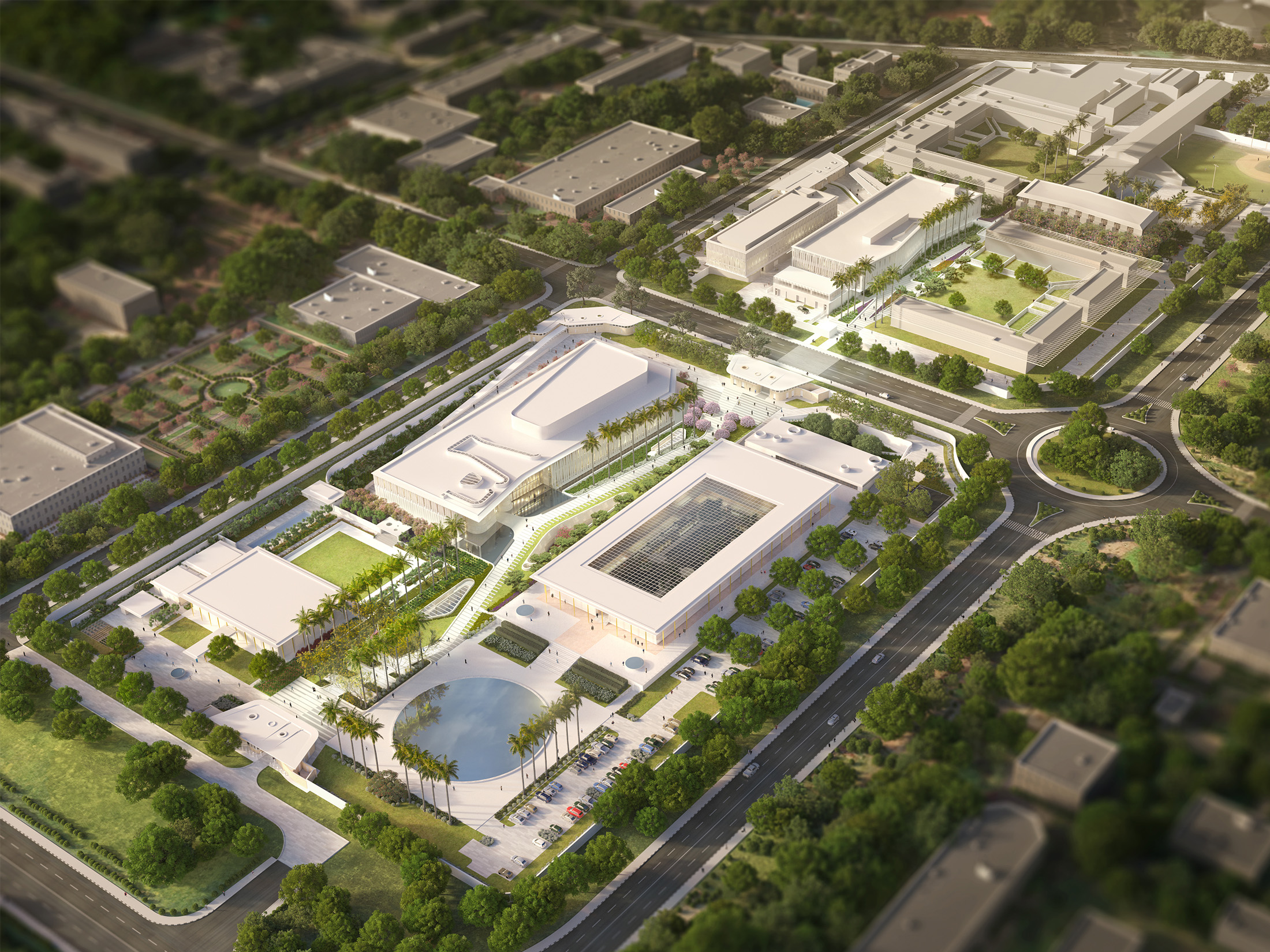
Blocking and stacking was a particularly complex element for this project. The team devised an innovative design strategy that allows the new buildings to maintain a size and scale that balances the historic buildings on site rather than overpowers them.
Project Information
Services
Location
New Delhi, India
Size
472,535 SF
Owner
US Department of State Bureau of Overseas Buildings Operations
Lead Designer
Weiss/Manfredi
Related Projects


