


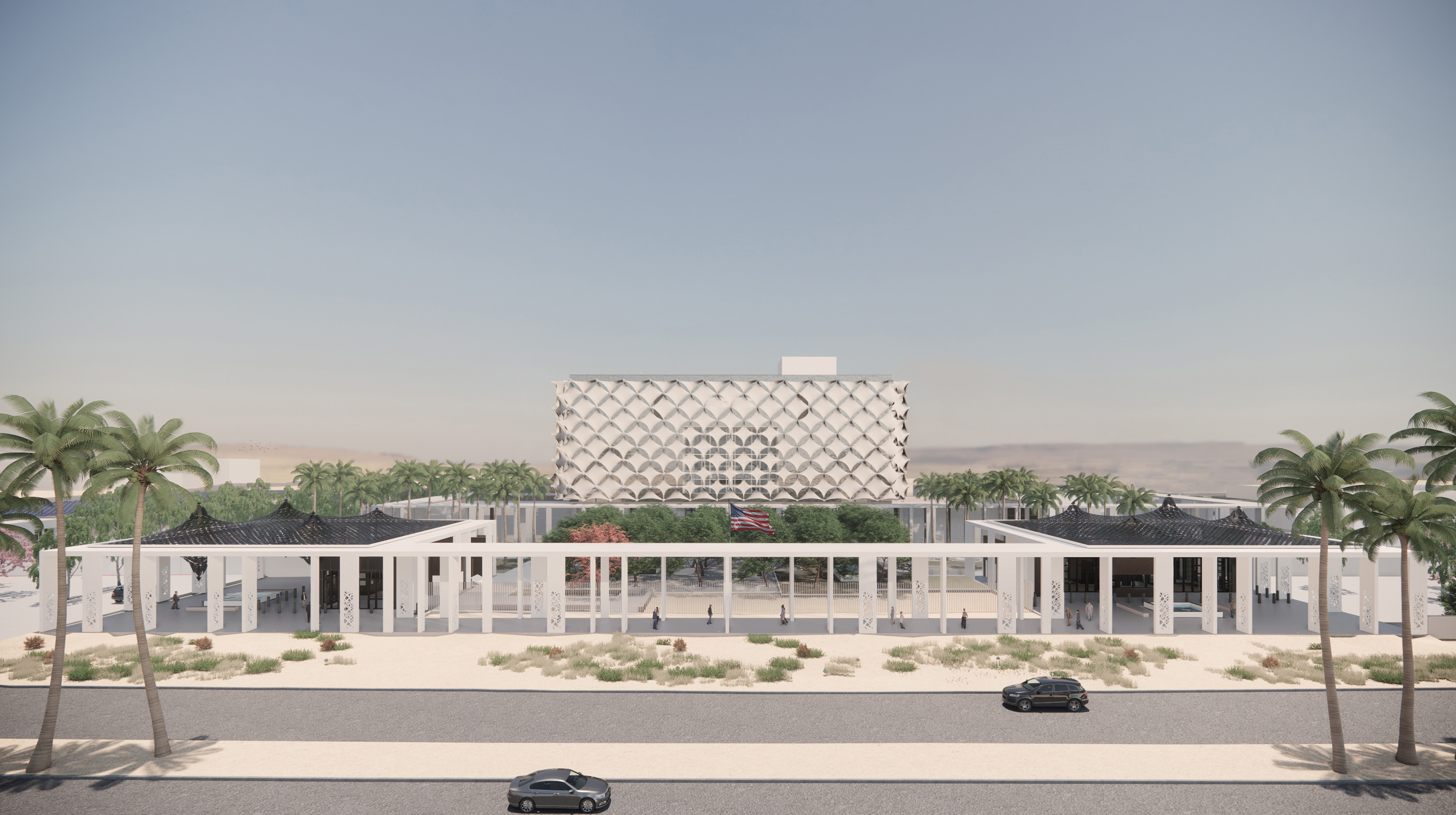
The design includes large cable-tensioned shade structures, which evoke Bedouin tents marking entry plazas, recreational areas, and residential terraces.
US Embassy
Doha, Qatar
In Qatar’s dynamic capital, the new US Embassy in Doha will establish a secure and modern diplomatic presence for the United States.
Located on a five-hectare site between downtown Doha and Lusail, the campus reflects the city’s growing role as a regional center for finance, education, and innovation.
As architect of record in a design-build partnership, KCCT is leading the vision for a 10-building campus that unites function, security, and contextuality. The new embassy blends regional materials and contemporary forms to create a resilient, efficient, and culturally responsive environment. The result is a forward-looking campus that embodies American diplomacy and the evolving spirit of Doha.

Design Approach
Architectural design for the embassy campus draws inspiration from historical regional typologies, with buildings connected by shaded pathways and complemented by outdoor courts, plazas, and garden spaces. Local culture is predicated on the harsh climate with a significant focus on the sea, and is primarily based on traditional Bedouin culture with lesser influences from India, East Africa, and other Persian Gulf nations.
The chancery building incorporates large shade screens designed to push diffused daylight deep into the building while protecting occupants from direct heat gain and glare.
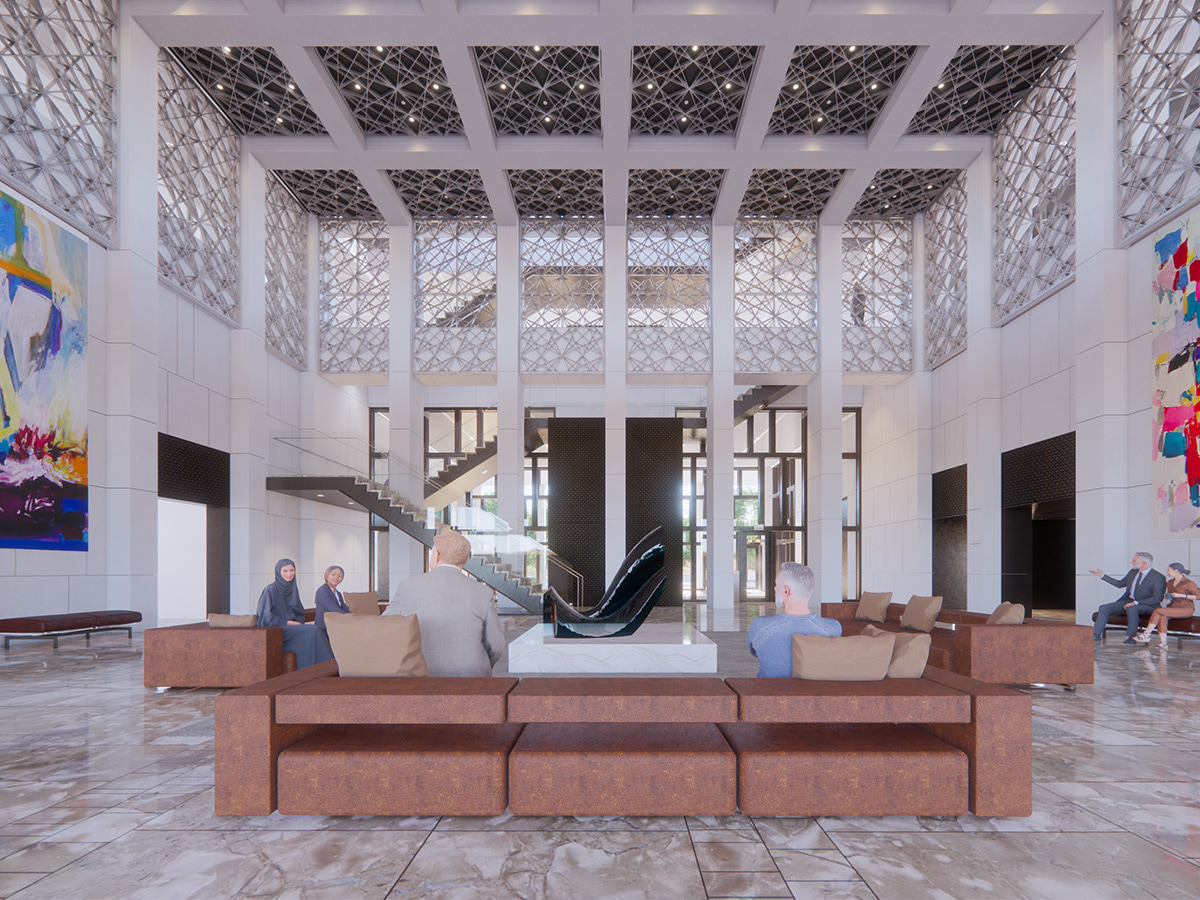
All buildings are cast-in-place concrete, and utilize steel elements to support the screen façade. Dense “white onyx” limestone is the primary rainscreen element and quarried in Oman. The coloration is consistent with the regional desert landscape and is used extensively in similar modern developments throughout Doha. Several variations in the finish of the stone provide a subtle difference in stone appearance as the site is traversed.
Interior finishes were selected to create a simple, modern palette inspired by traditional “shamsiya” panels.

The new office building tower is wrapped with tension fabric to create a pattern informed by customary Sadu weaving. Each facade is attenuated based on solar orientation to act as a shield from the harsh desert sun and maximize views by allowing diffused light deep into the building.
Tensile shade canopies over the main compound access control, consular access control, recreational, and Marine Security Guard facilities are comprised of perforated thin-gauge anodized aluminum panels over a tensioned stainless-steel cable net and strut system.

Project Information
Services
Location
Doha, Qatar
Size
212,000 SF
Owner
US Department of State Bureau of Overseas Buildings Operations
Design-Build Partner
AICI-Special Projects
Related Projects


