US Embassy
KCCT serves as the associate architect in collaboration with Morphosis in the delivery of this new campus, designed to function as a standalone community.
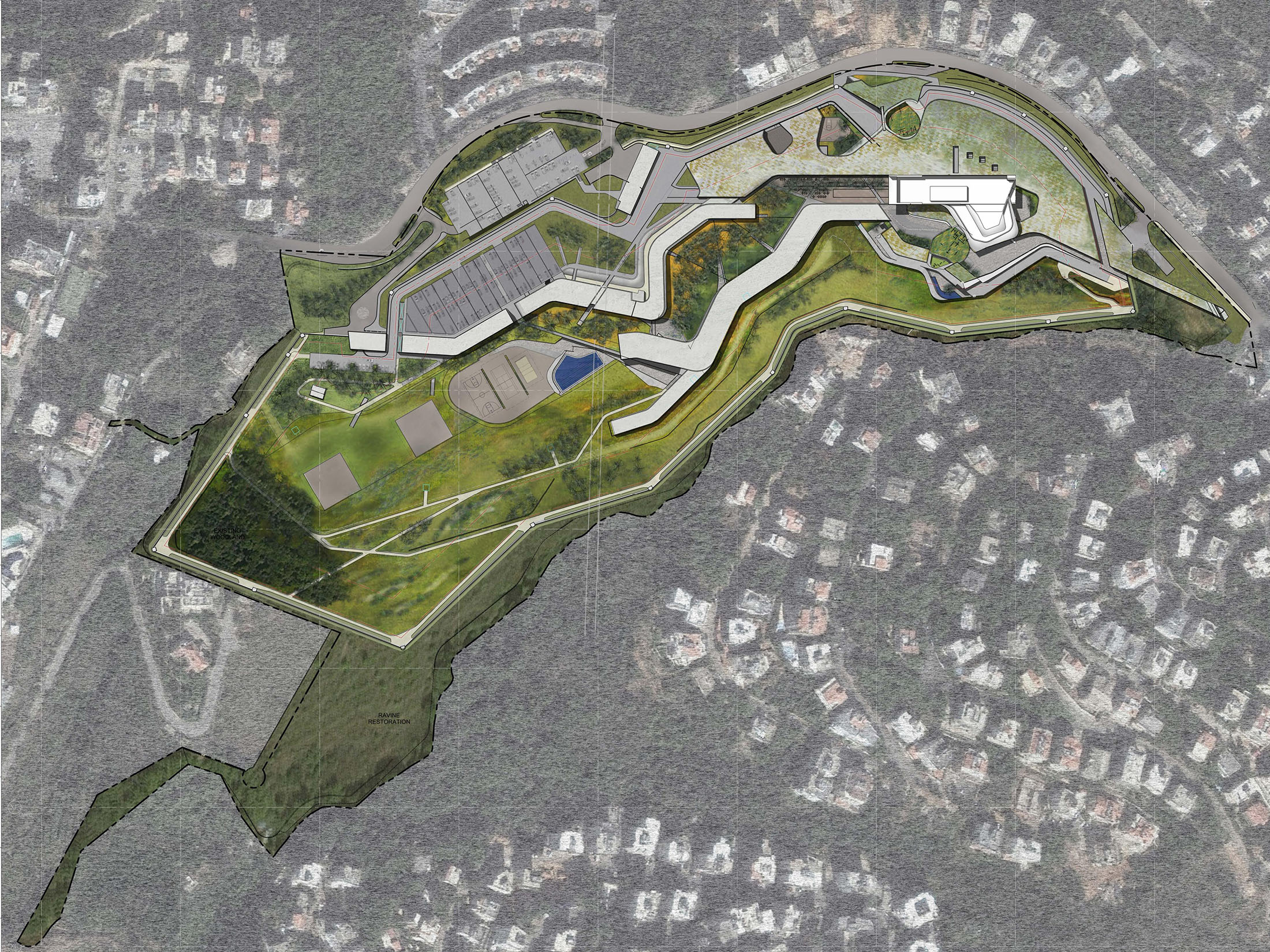
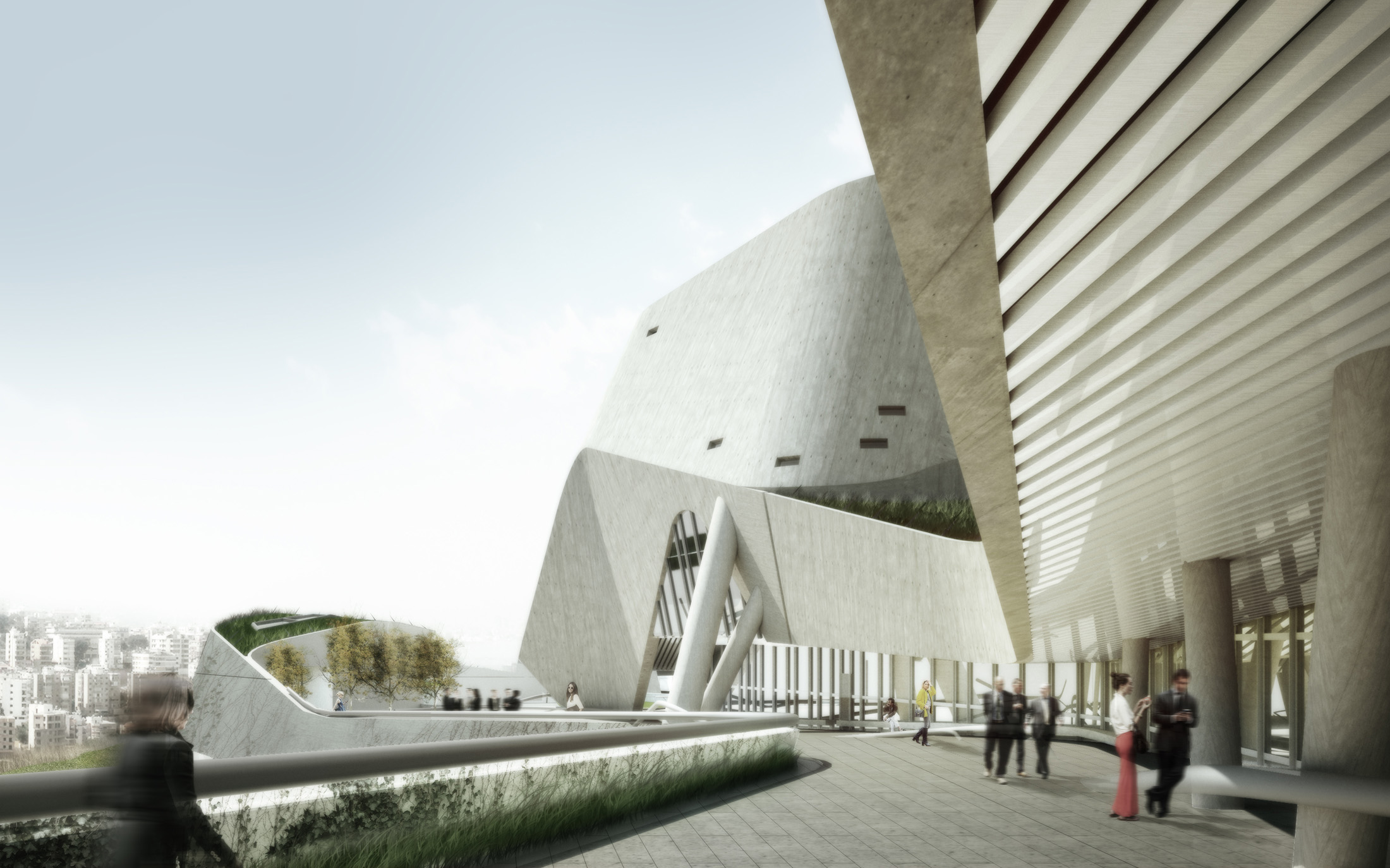
Buildings are clustered on the eastern half of the site to promote walkability, with recreational open space and flexibility for future expansion to the west. Blending with the medium density and character of the neighborhood, the embassy maintains a low profile along Aoukar Road, culminating in the symbolic rise of the chancery, consulate, and public function areas at the highest point of the site. Consular services and public diplomacy areas are designed to efficiently support visitors, with comfortable waiting areas, shaded outdoor spaces, and an art program featuring site-specific commissions from international and Lebanese artists. Residential buildings extend from the chancery, framing the site’s central service and circulation corridor–a community “main street” that supports daily operations and provides practical outdoor space for embassy staff.
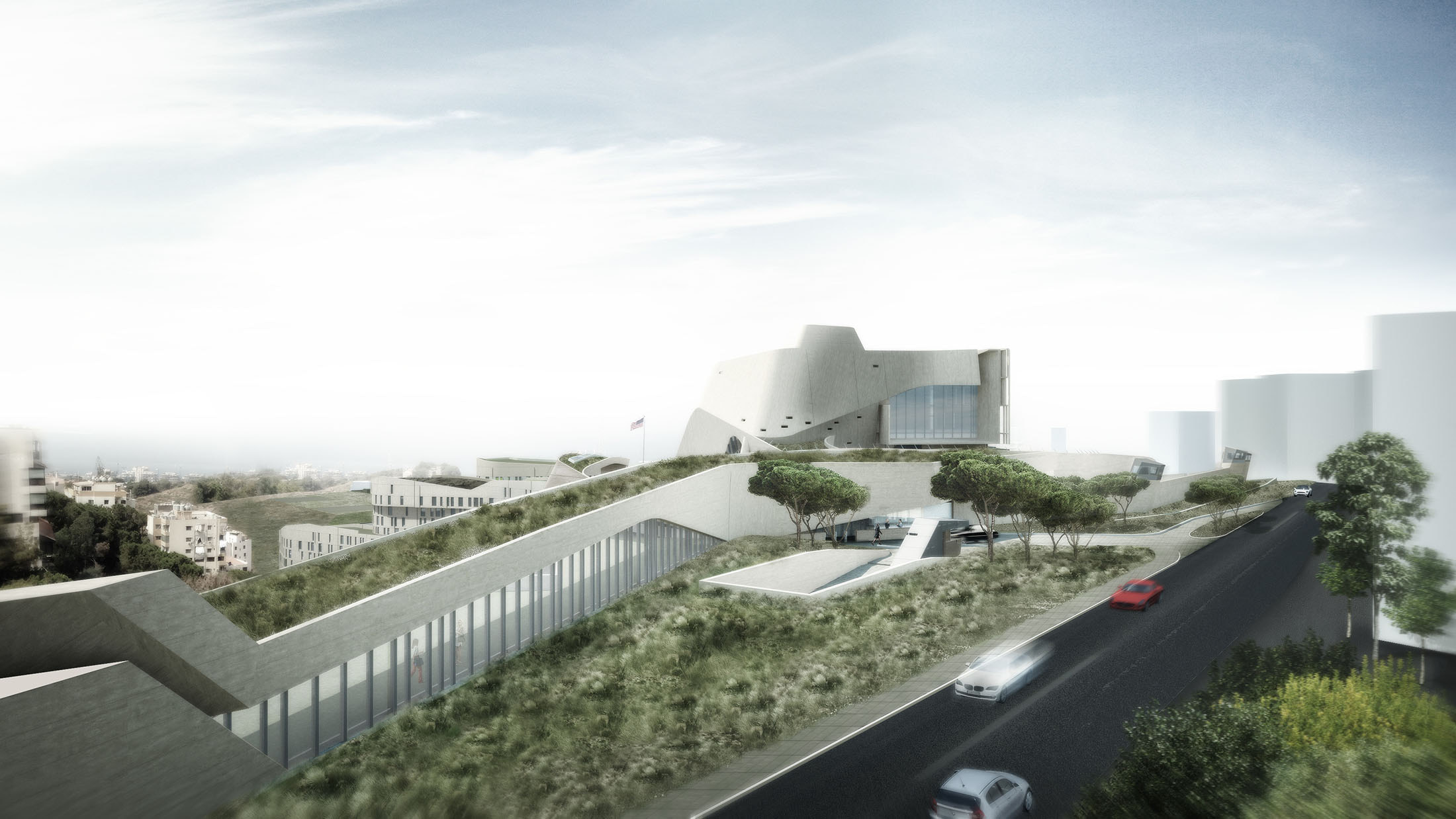
The new embassy pursues rigorous energy-saving goals, and is a model of building performance optimization. Its design reduces risk and operating costs associated with utilities and maintenance while enhancing natural hazards adaptation. Design strategies include a net zero energy chancery; net zero water for site irrigation; a full waste-water treatment facility on site; rainwater reuse for toilet flushing; and a majority of building heating supplied through heat recovery systems. Taking advantage of the mild Mediterranean climate, natural lighting and airflow are used whenever possible to reduce energy usage and improve interior ambience. Landscaping and green roofs across the embassy use water-saving native plantings, while significant habitat regeneration throughout the site will preserve the local ecosystem. Durable, locally sourced materials, such as cast-in-place concrete facades and precast concrete floor tiles, are used to improve longevity and reduce the energy footprint during construction. A site-wide building management system monitors performance to ensure that building systems will continue to function as designed.