


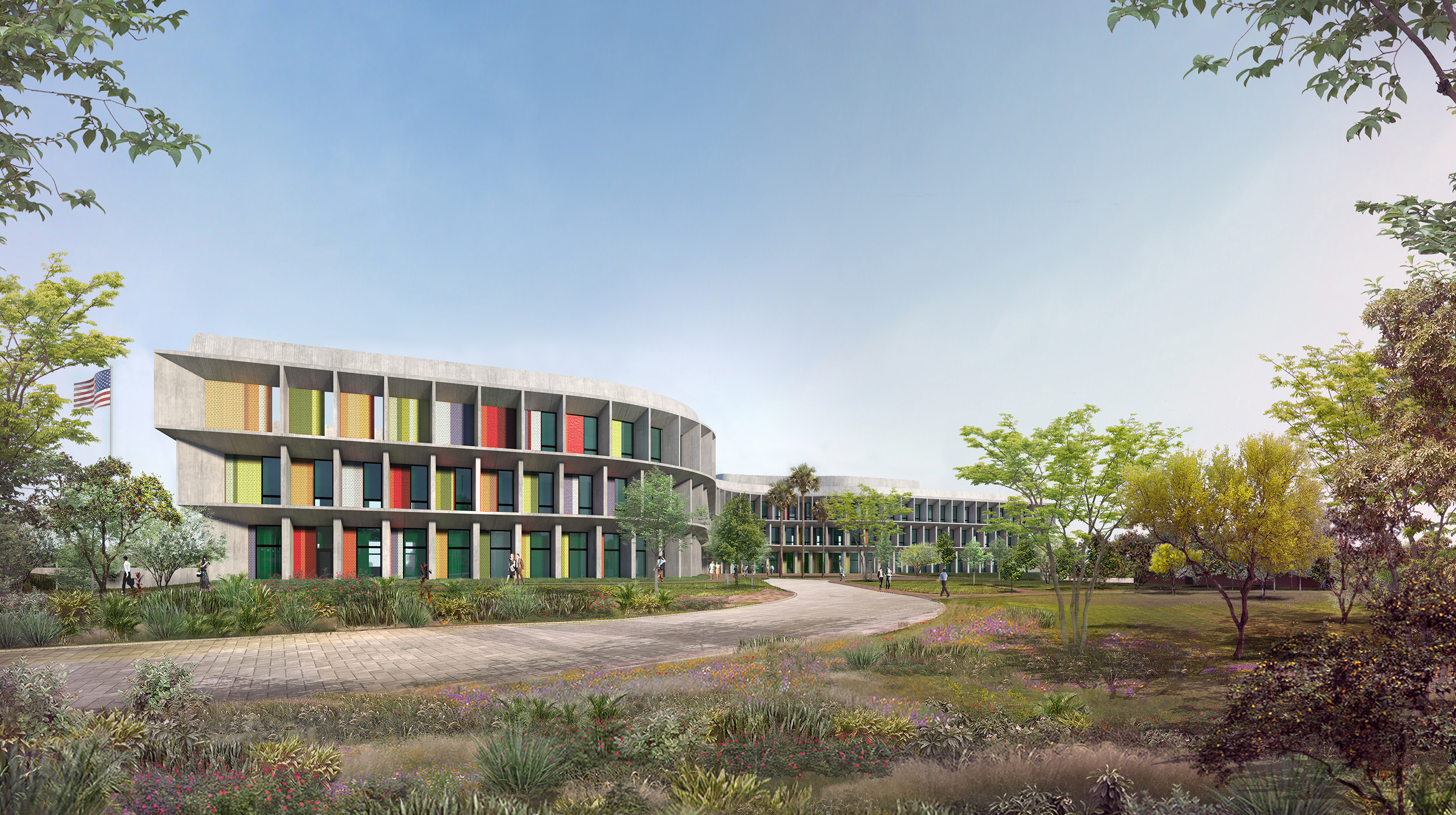
US Embassy
The Department of State commissioned lead designer Studio Gang and associate architect KCCT to design a new embassy in Brasilia that builds on the legacy of this remarkable place and expands on the deep foundations of Brazilian-US diplomacy. The new Embassy on this legacy 12-acre site is distributed throughout several new structures, including a new Chancery, a warehouse, a recreation pavilion, the Marine Security Guard Quarters, and a parking structure.
With its bold structural expression, curving form, and open, welcoming gesture to the city beyond, the new campus design honors the daring modernist history of Brasilia and its original designers.

The façade of the new office building is designed to create solar shading and provide performance benefits in a configuration that is both simple to construct and easy to maintain. The façade reinterprets Brazilian brise-soleil in an innovative and contemporary way that deeply integrates structure, environmental performance, and architectural character.
A system of vertical and horizontal concrete fins wraps the building’s exterior, providing structure and shading that is tailored to each exposure to mitigate both high- and low-angle solar gains. The fins step outward at upper levels to provide self-shading. This design feature is most pronounced along the north-facing exposures where high-angle solar gains are especially intense.
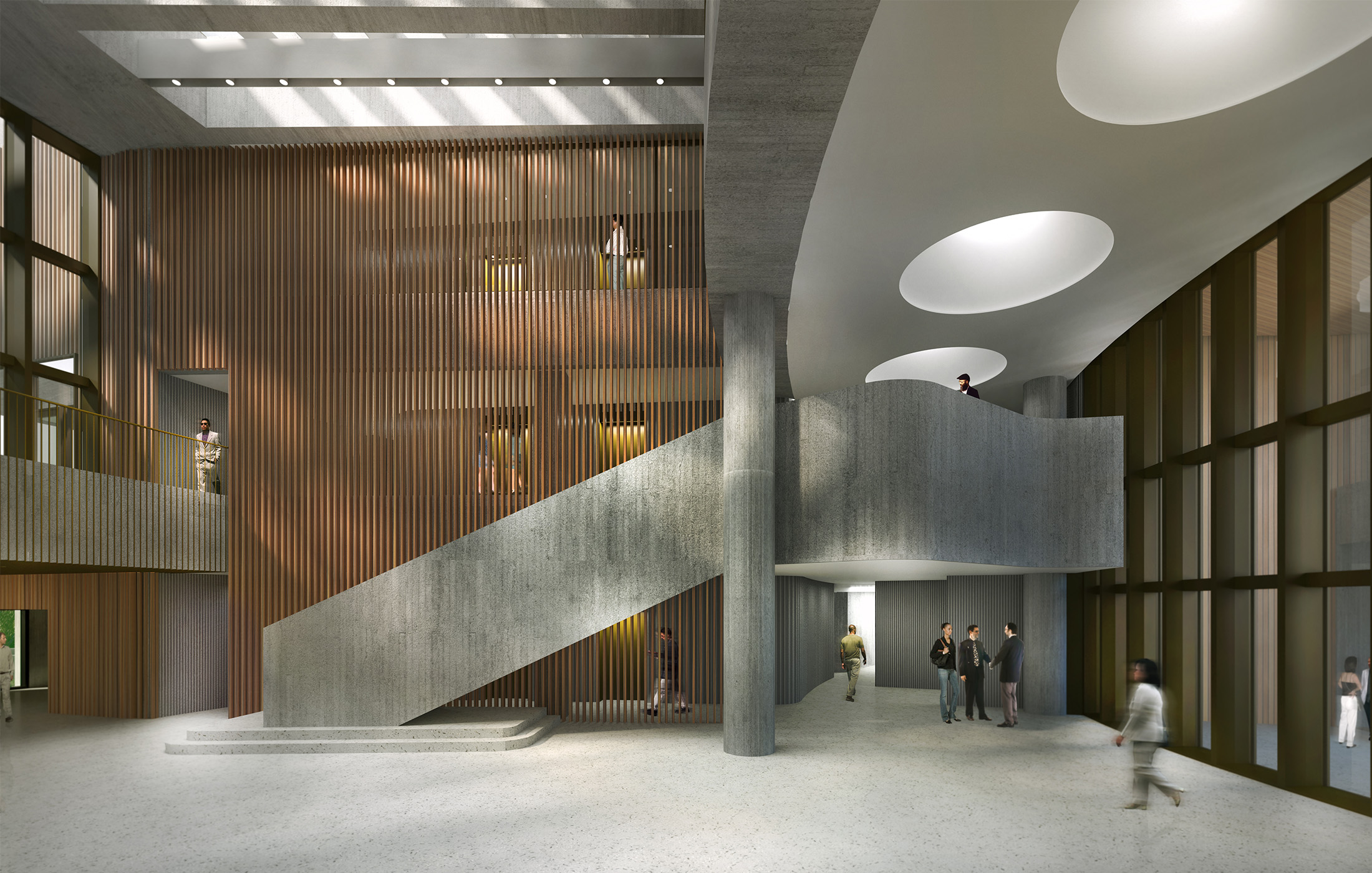
The chancery interior is organized around two axes, a serpentine circulation spine that runs the building’s length and a gallery that bisects its curving form. This arrangement offers clear functional access from vertical circulation to all program spaces and a sense of arrival at the building’s center reinforced by a programmatic arrangement that places key spaces for collaboration and gathering around the gallery, while locating offices along the building’s wings for increased privacy.
Inspired by Brasilia’s landscape and color palette, locally sourced and sustainable materials complement the interiors. Wood paneled “porches” at each department entry zone define departmental identity within the larger floor-plate and a clear hierarchy of spaces to support intuitive wayfinding. Office areas benefit from the brise-soleil exterior wall, which is optimized to allow daylight at the perimeter while reducing glare.
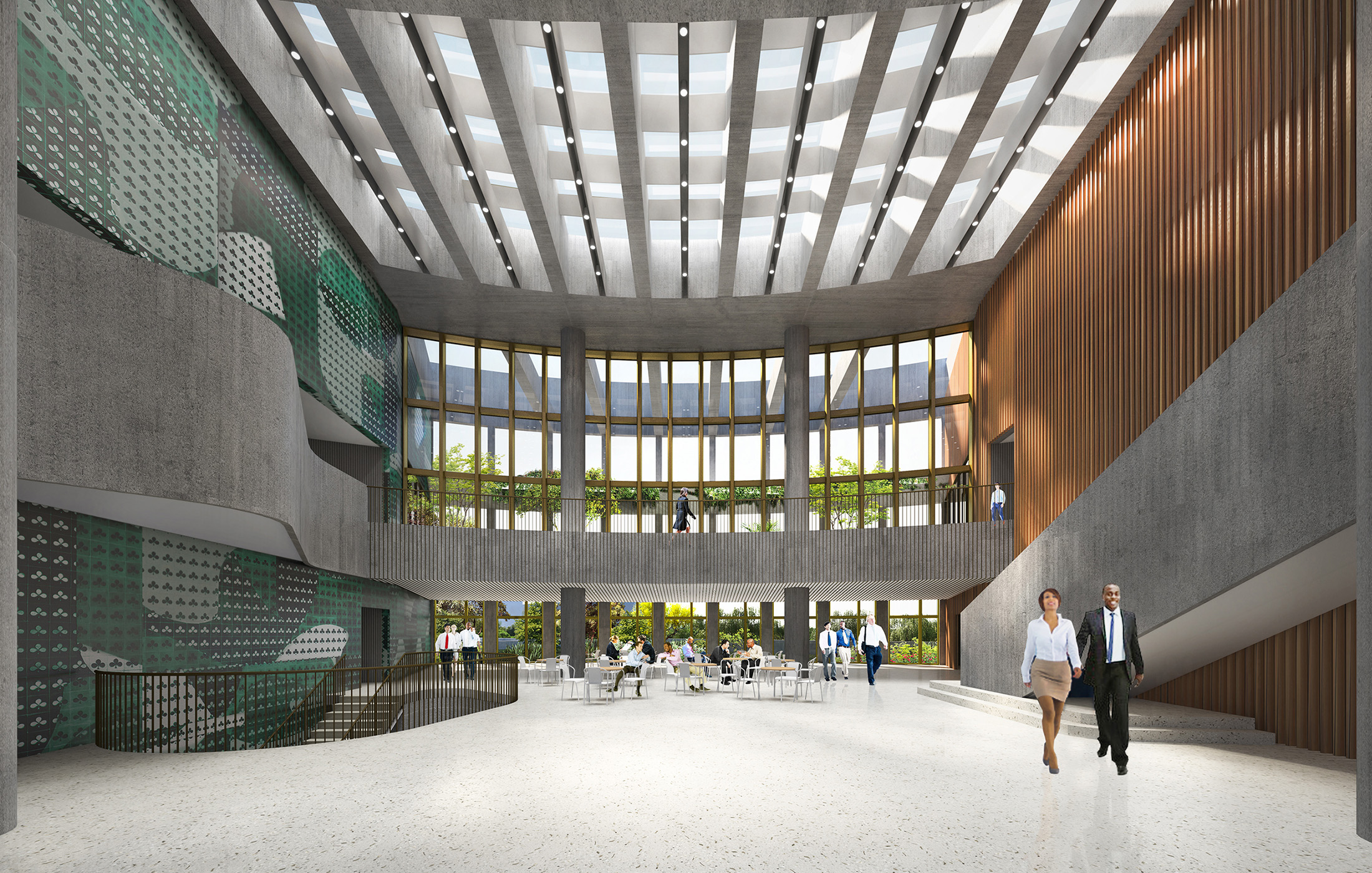
The Embassy’s flexible, day-lit meeting and working spaces support productive interactions and connection to the outdoors, encouraging planned and spontaneous collaboration. A range of indoor-outdoor spaces enable gathering to promote intellectual and cultural exchange between diplomats, staff, and visitors. A visually open and welcoming perimeter establishes a gracious relationship between the site and its surroundings while maintaining access, safety, and security.

The optimized light levels produced by the embassy’s self-shading fins reduce solar heat gain and allow the majority of staff workstations to be located within three meters of the facade, reducing electricity use for lighting. Outside, the high percentage of non-absorptive surfaces across the entire site, created through the abundance of vegetation and light-colored pedestrian hardscapes, reduces the heat island effect and creates a comfortable outdoor environment.
Responding to the site’s most challenging conditions— the climate’s intensely wet and dry seasons—the re-introduction of drought-tolerant Cerrado plants represents a naturally resilient solution.
While many of these interventions may go unnoticed day-to-day, locally sourced building materials, including jatoba wood and emerald marble, feature prominently throughout the embassy, demonstrating and cultivating best practices within the diplomatic community and beyond.


