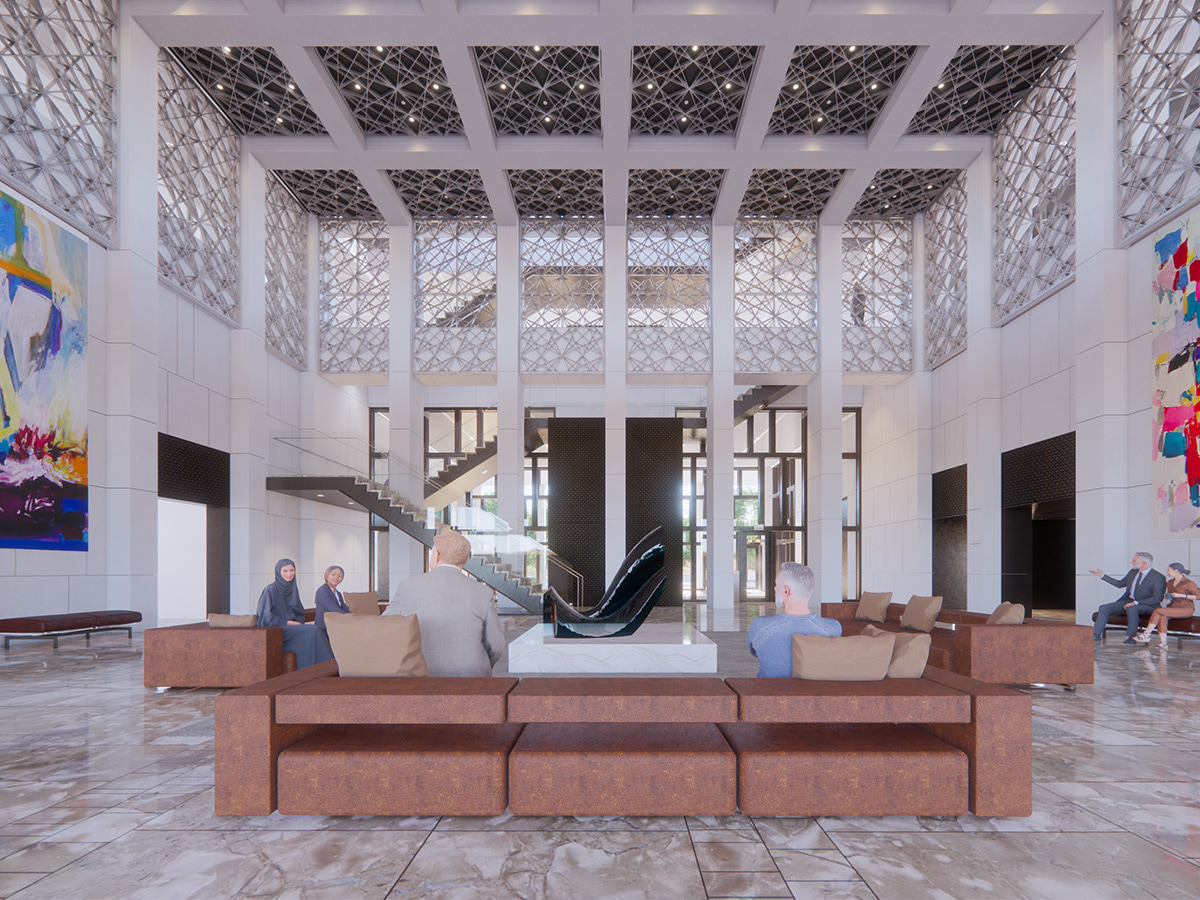
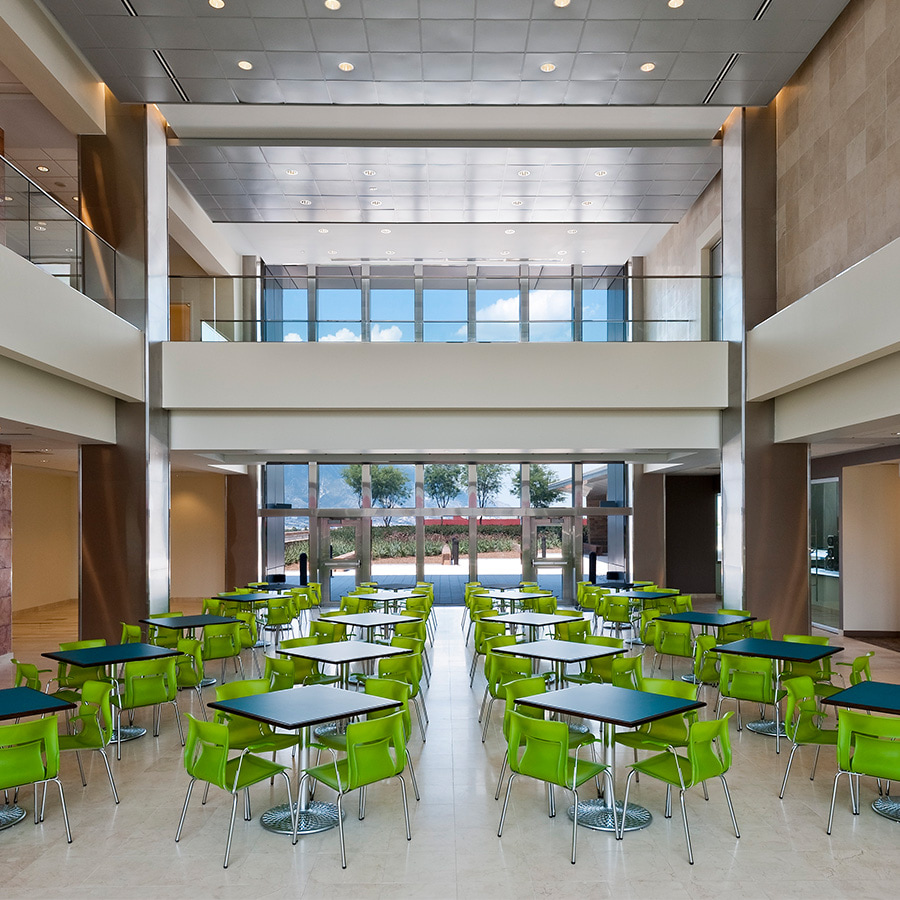
KCCT was tasked to re-envision a new embassy at more than double the original program and to utilize the completed construction to the maximum extent for economy.

US Embassy
Port Moresby, Papua New Guinea
KCCT reimagines the US Embassy in Papua New Guinea, doubling capacity with a modern, future-ready design inspired by local maritime culture.
Originally envisioned by KCCT with a distinctive marine theme to celebrate Papua New Guinea’s coastal location, the embassy compound project took an unexpected turn. After topping out the initial buildings, rapid program expansion prompted the Department of State Bureau of Overseas Buildings Operations to pause construction and reassess the mission’s evolving needs.

In addition to the enlarged office building, a new Marine Security Guard Quarters and a service access control facility were added to the program.
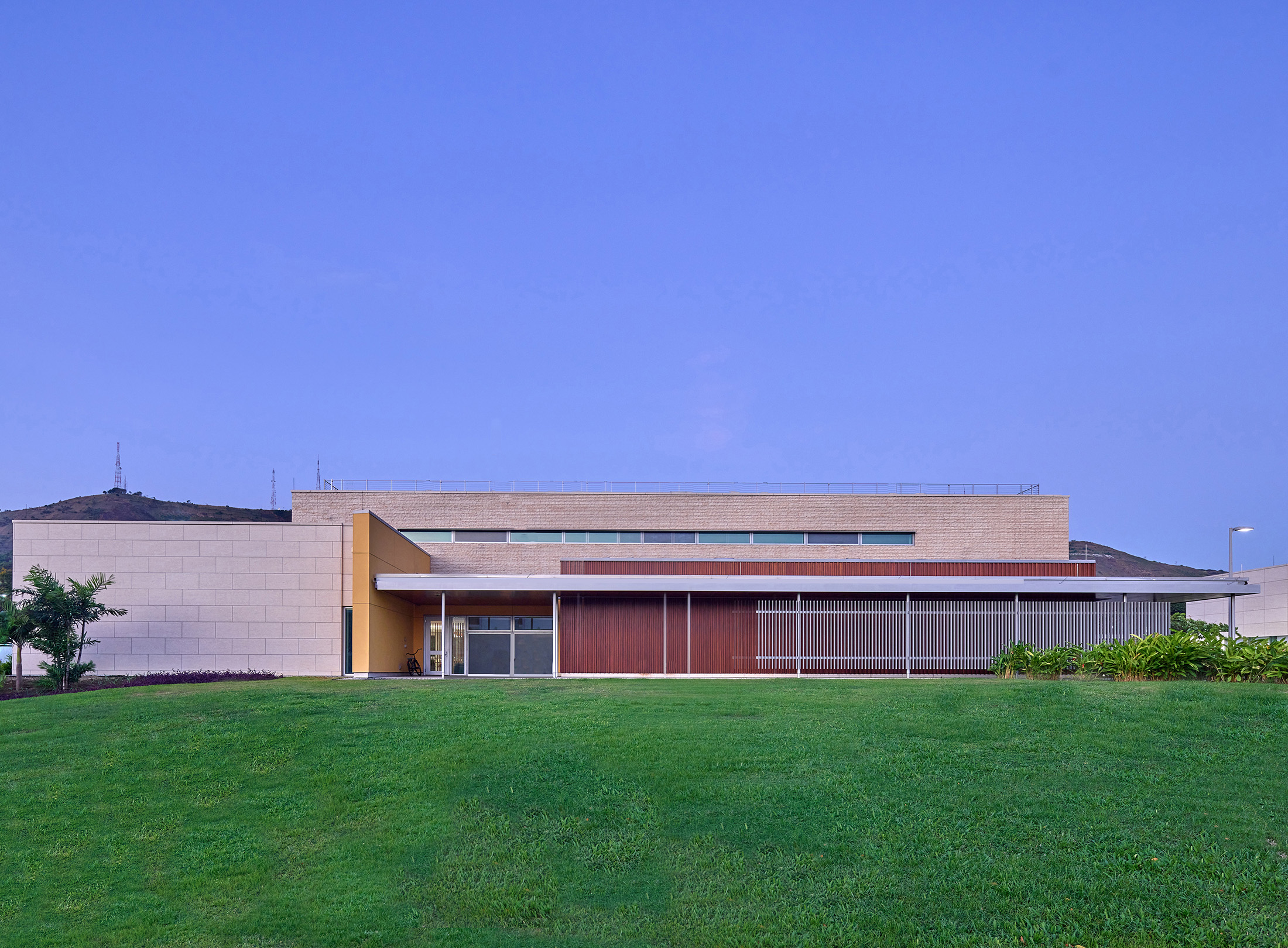
Marine Security Guard Residence
Design Approach
Sited in front of the original chancery, the new four-story office building is a climate-responsive and place-driven design solution. Designed to the highest security requirements, the building is defined by its civic quality and its approach to staff productivity. Materials are chosen to support the civic and representational importance of the buildings. On the exterior, light-colored stone, appropriate for the context of Papua New Guinea, lends a timeless quality to the project. A grand entry canopy stretches out from the new office building entry to engage visitors at the stone entrance plaza upon arrival.

The building appears light and ethereal through the reflection of sunlight. Sunshades provide maximum daylight and views of the beautiful topography by controlling glare and visual comfort for the staff.

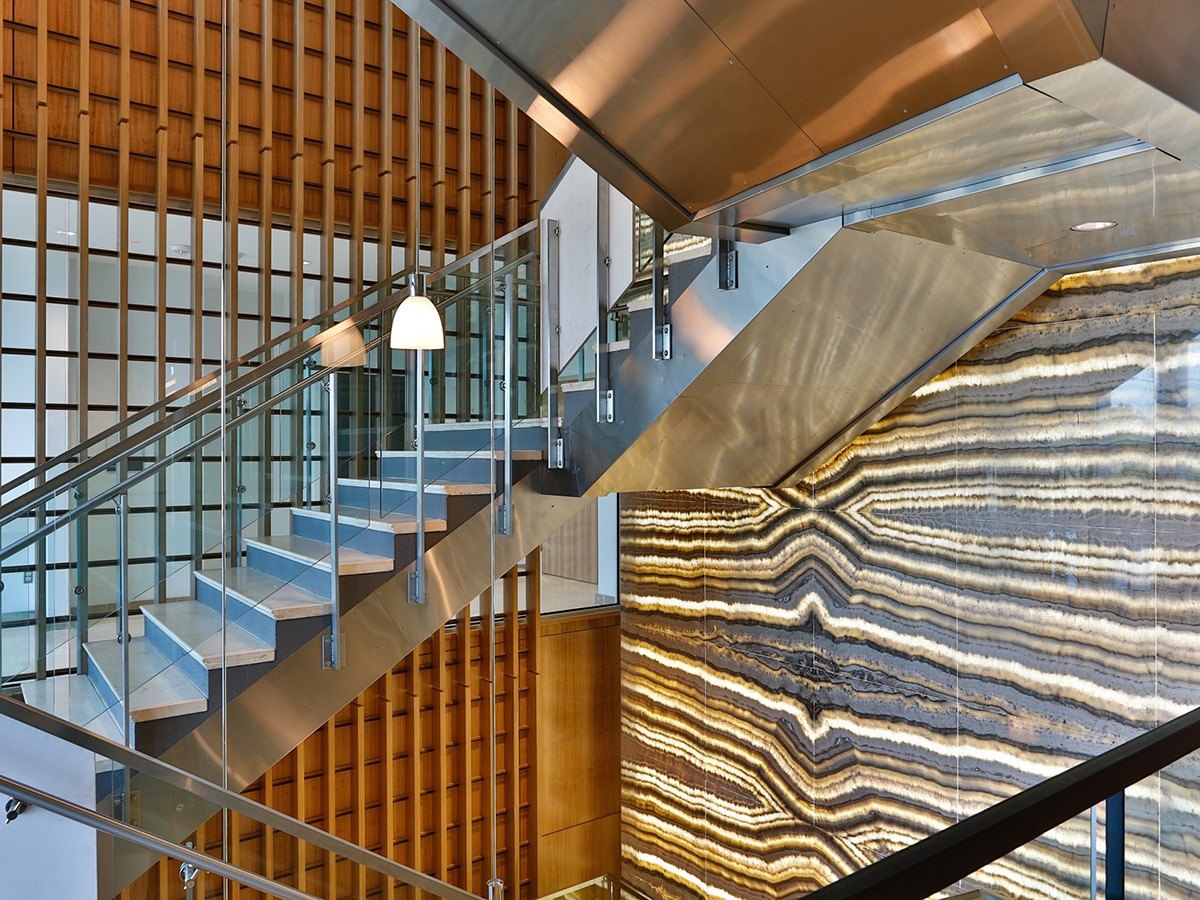
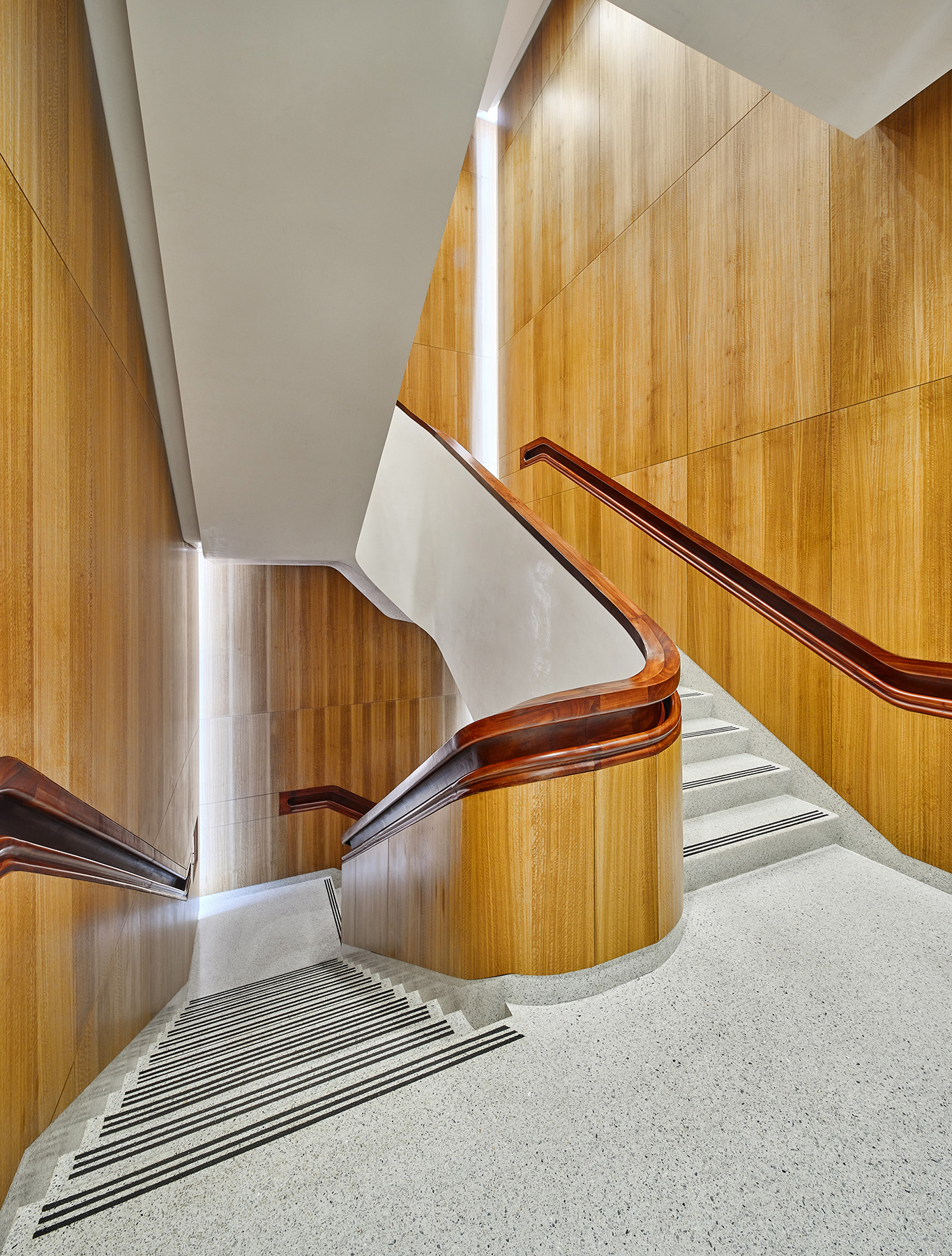
On the interior, regional materials define the palette: regional terrazzo enlivens the floors, Australian bluestone clads the monolithic core, and local hardwood highlights special program areas such as the multi-purpose room.
Building Performance
Energy independence and resource efficiency was integral to the success of this project due to high local electricity costs. Photovoltaic panels on all buildings and parking sunshades achieve an average of 247 kW which offsets a dependency on local infrastructure and lowers utility costs.
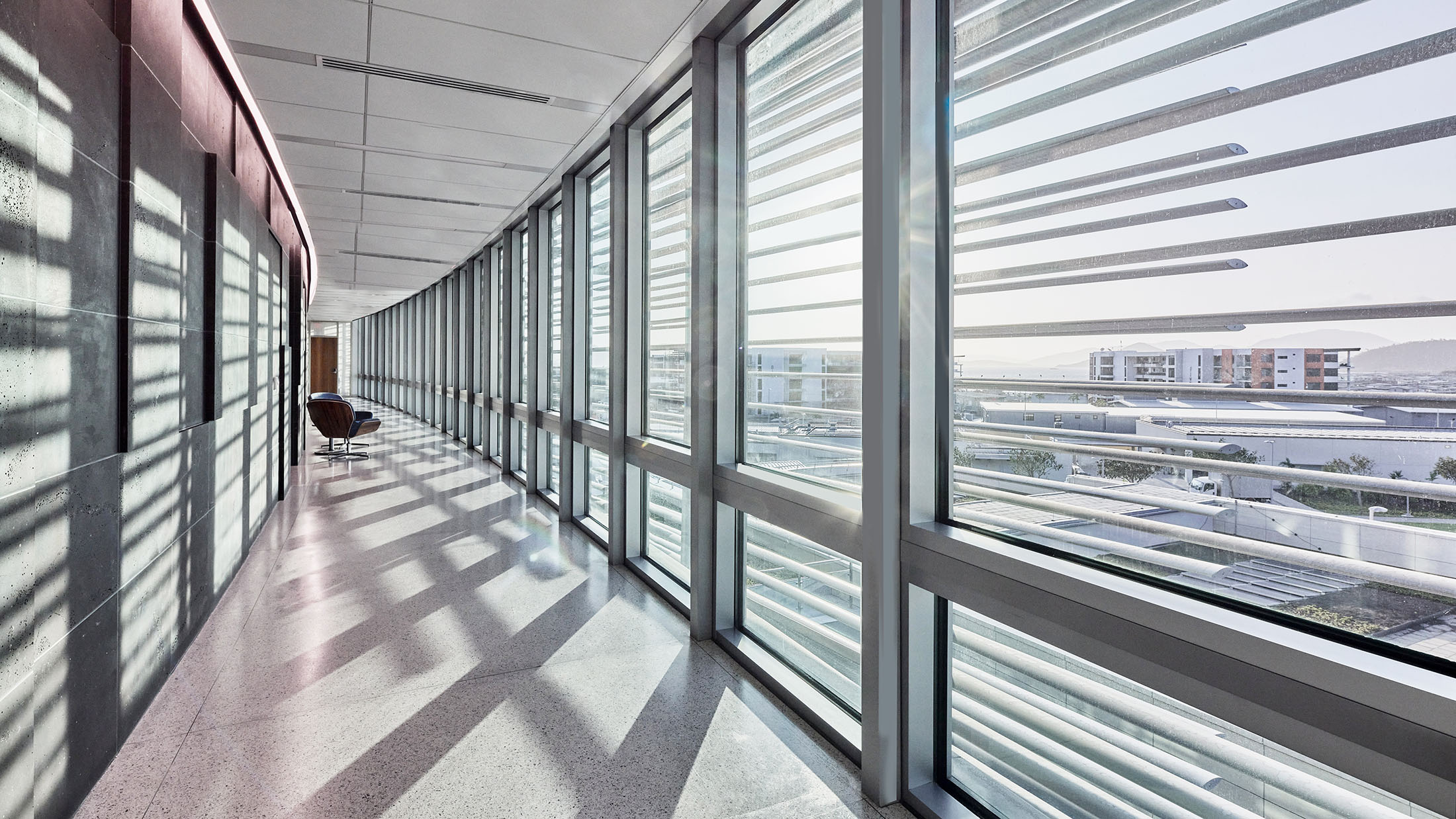
Other measures include the sunshade system to control daylight, glare, and solar heat gain, as well as additional roof insulation, improved window u-values and shading coefficients, equipment efficiency, and advanced lighting systems with daylight controls.


Project Information
Services
Location
Port Moresby, Papua New Guinea
Size
106,972 SF
Owner
US Department of State Bureau of Overseas Buildings Operations
Awards
Outstanding Small Project, Lambda Alpha International George Washington Chapter
Related Projects